The 4 Blocking B’s

When the prophets of old spoke out against the people they often asked, “How did we offend God?” Blinded by cultural norms, social customs and institutionalized religion they had lost touch with personal faith and spiritual imperative.
So when I say the Church is weak today because of its focus on buildings, budgets, boards and bylaws the response is almost always justifying these as though they were spiritually necessary! Yet the early Church had none of these and spread the Gospel far and wide in one generation.
The buildings used as church today are monuments to human pride and cultural expectation. When Peter wanted to built monuments to Jesus, Moses and Elijah on the Mount of the Transfiguration Luke reports, “Peter did not know what he was saying” (Luke 9:33). The same applies everywhere because structures do not help in “bringing in the sheaves”.
Congregations focus on the budget. How many arguments I have listened to about a few dollars someone wants removed or moved to another line. When the early Church appointed The Seven to look after money (Acts 6:3-5), least two (Philip and Stephen) were amazing witnesses of the Gospel, even to the martyrdom of Stephen. What finance committee in our time is chosen for the evangelistic zeal of its members?
Indeed, most Congregations end up begging people to be on Boards and committees because Canada Revenue Agency, or the denomination, specify how many people must be on the Board. So Boards have members who are simply a body count, but who do not have the calling or gifts for a job of oversight and planning, or “bringing in the sheaves”. They make decisions by a vote, not prayer and fasting. The Church was never intended to be a democracy, but rather a theocracy, where our love for God and others permeates everything discussed and decided without politics or hidden or personal agendas to do what God appoints of us, “bringing in the sheaves”.
The Manuals of churches are hundreds of pages long. Canon Law is volumes. These bylaws to the Bible cover how to present a motion, magic words for ordination, how to fill in reports, and membership so that undesirables are excluded… The Councils of Jerusalem, however, presented this as Church rules (Acts 15:28-29): “The Holy Spirit and we have agreed not to place any additional burdens on you. Do only what is necessary by keeping away from food sacrificed to false gods, from eating bloody meat, from eating the meat of strangled animals, and from sexual sins. If you avoid these things, you will be doing what’s right” (God’s Word Translation©, see also Acts 15:20 and 21:25).
Bylaws also state at length what you must believe, yet Paul stated clearly: “I passed on to you the most important points of doctrine that I had received: Christ died to take away our sins as the Scriptures predicted. He was placed in a tomb. He was brought back to life on the third day as the Scriptures predicted” (1 Corinthians 15:3-4 God’s Word Translation©), no elaborate statements of faith or theological brain exercises.
Now if I told you this, what would you reply?

Judging

A lot of Christians buy into the principle, “Stop judging”.

The powers of religion want members to believe that; otherwise the institution must surely be judged also.

But what the Bible says has a context. “Stop judging so that you will not be judged. Otherwise, you will be judged by the same standard you use to judge others. The standards you use for others will be applied to you” (Matthew 7:1-2 God’s Word©).

So, when you judge with love, fairness using a careful examination applied with humility following the process Jesus demanded (Matthew 18:15-17 God’s Word Translation©***), you are on sound ground, spiritually speaking.

Anything else comes from evil. And that should be judged.

***“If a believer does something wrong, go, confront him when the two of you are alone. If he listens to you, you have won back that believer. But if he does not listen, take one or two others with you so that every accusation may be verified by two or three witnesses. If he ignores these witnesses, tell it to the community of believers. If he also ignores the community, deal with him as you would a heathen or a tax collector” (God’s Word Translation©).

Let’s Talk

I suffer from the absence of discussion.

So many people hold their view, opinion, ideology as their highest priority. Too few want to grow their character, learn something new or connect to the vitality of another person’s experience.

Beware of all labels, but people who are politically right wing or left wing, spiritually fundamentalist or modernist, socially libertarian or authoritarian, define discussion as aggressively demanding agreement with their view and humiliating those who do not acquiesce.

Oh! for more people who do not hide behind personal ideology, but want to search for a better idea, indeed truth, even when it means re-examining their finite world.

I live on the open plain, yet when I encounter people like I am describing above they fill their moat, barricade their gates and fire volley after volley of fiery darts even though I carry the white flag of truce.

Thank you God for Your listening ear, gentle correction, and patience as I search for greater truth and framing my heart to accept people, all people, (even those with a closed mind!).

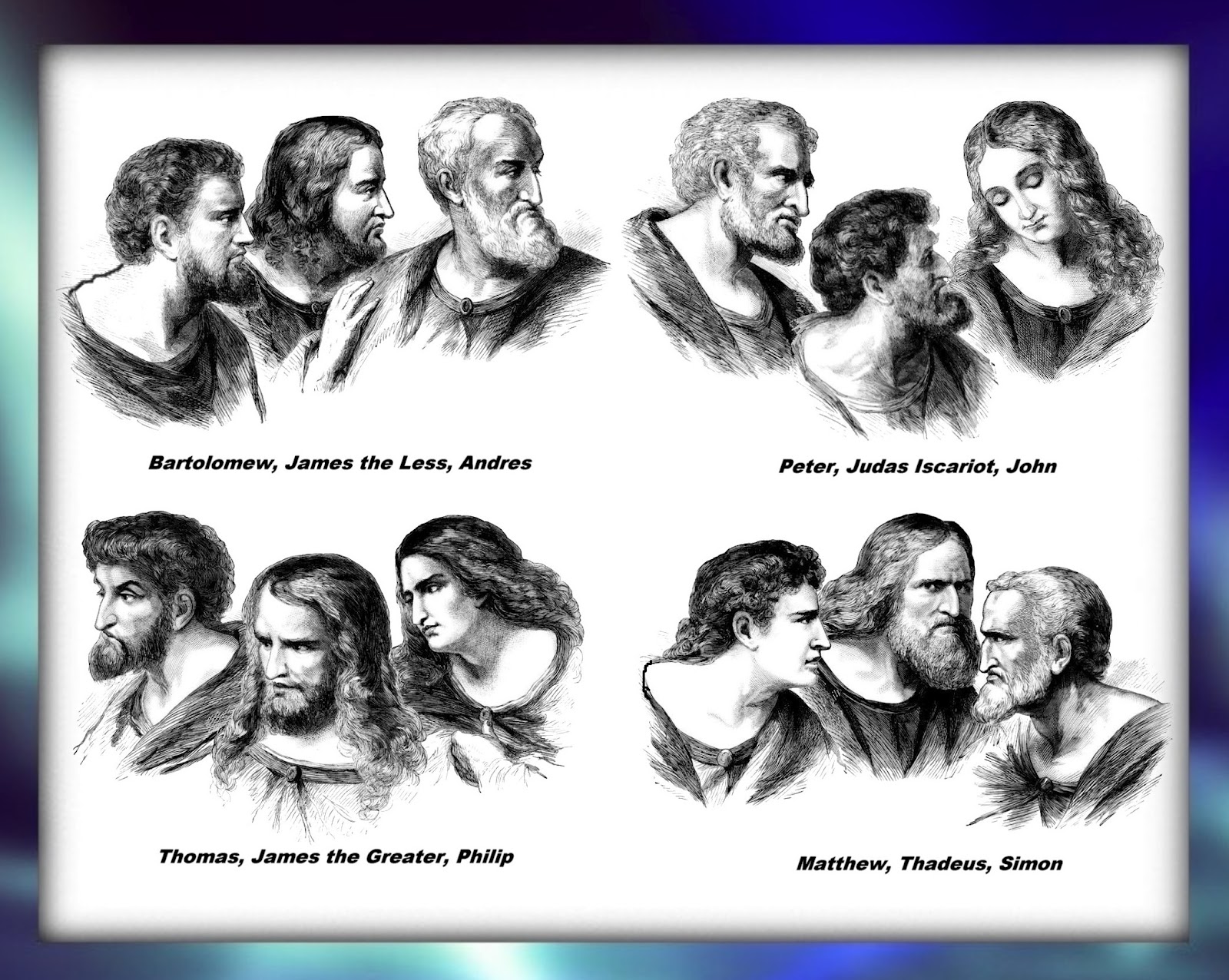
Apostles?

The indispensable standard the Bible gives for someone to be an Apostle is that it “must be one of the men who accompanied Jesus with us the entire time that the Lord Jesus was among us” (Acts 1:21 God’s Word©). “We apostles are those men who ate and drank with Jesus after he came back to life” (Acts 10:41 God’s Word©)

What, then, are we to do about Paul who claimed he was an Apostle? “I am an apostle sent to people who are not Jewish” (Acts 11:13 God’s Word©).

The Twelve were centred in Jerusalem, though they did minister beyond the Jewish people. Paul came from Tarsus in the Province of Cilicia (noted for a major university) in what is now Turkey. In other words, while Jesus began the Good News Realm in Israel, Paul began that ministry to the Roman world. He was both a scholar and Roman citizen, as well as a Jew, and is, therefore, the icon of the merging of all people into the “one Lord, one faith, one baptism, one God” community (Ephesians 4:5-6) under the authority of Jesus Christ. This unity is “built upon the foundation of the apostles and prophets, Jesus Christ personally being the chief cornerstone” (Ephesians 2:20).

We are told that Matthias replaced Judas Iscariot as the twelfth Apostle of God’s chosen people, but the Bible does not record any replacements of martyred Apostles, nor someone else taking on the mantle of Paul. The role played by them is not, therefore, perpetual, but foundational. “The disciples were devoted to the teachings of the apostles” (Acts 2:42 God’s Word©). These teachings are now contained in the New Testament, and there is no need, even a prohibition on, adding to them!

This leads to the realization that there are no Apostles in the Church of today.

Further, no Christian has authority over other believers at all (except where the community of faith must discern what to do with any member who persists in error and refuses correction). The Church must not be organized as a hierarchy, because “Jesus called the apostles and said, ‘You know that the rulers of nations have absolute power over people and their officials have absolute authority over people. But that’s not the way it’s going to be among you. Whoever wants to become great among you will be your servant’ ” (Matthew 20:25-27 God’s Word©). The entire Church is an organization of those who serve, NOT those who lead and others who follow! That is another reason why there are no Apostles, because they exercised some authority to get things started, being the New Testament in flesh before it was Scripture. The long-term life of the Church rests upon service (Matthew 25:31-46), with only Jesus as the Head (eg Ephesians 1:10, 22, 4:15).

Humans like things organized because it gives them a sense of control, but one Christian having authority over others is always wrong. The pattern we have is: “Don’t let anyone look down on you for being young. Instead, make your speech, behavior, love, faith, and purity an example for other believers” (1 Timothy 4:12, God’s Word©); and, “Don’t be rulers over the people entrusted to you, but be examples for the flock to follow” (1 Peter 5:3 God’s Word©).

Anyone, therefore, who claims to be a modern day Apostle cannot be taken seriously.

Now vs Forever

Why do people reject God and deny the work of The Spirit? One answer is found in the parable of the three servants in Matthew 24:14-30.

The key passage for this observation is:

Then the one who received two thousand dollars came and said, ‘Sir, I knew that you are a hard person to please. You harvest where you haven’t planted and gather where you haven’t scattered any seeds. I was afraid. So I hid your two thousand dollars in the ground. Here’s your money!‘” (Matthew 25:24-25 God’s Word©).

The useless servant (verse 30) was afraid and accused the Boss of taking credit for, and hoarding, all the benefit of the work “done by others”.

But wait just a minute!

The Boss gave the servants all the money (all the resources) for the venture. The servants had no personal finances to invest in the enterprise. The servants simply had opportunity to multiply the estate of the Boss (of which they were a part!).

The Boss praised the work of the two servants who did that and rewarded them handsomely (verses 21 and 23). The useless servant slandered the Boss (verses 24-25).

People want the credit and praise for what God does! And if they can’t get the honour and authority they seek, then they will not only do nothing for, but will even become enemy of, the Boss, even though Jesus paid the entire cost to deliver every human from selfish egotism, replacing that with a profound respect for The Creator and everyone created.

In other words, no rigorous activity, no intellectual achievement, no religious ceremony, no adventurous quest, nor membership in any group, race, gender, political party or system can add anything to what Jesus paid on the cross. A response of, “I accept”, to what Jesus Christ did opens the door to an eternity of revelling in all the goodness in the universe. Solitary satisfaction becomes living for the benefit of the whole human race, which brings unity and community rather than division and derision.

Those who cling tenaciously to their superiority over others will only know the eternal loneliness of having nothing more than self.

So, are you multiplying grace (God’s gifts and resources) with an eye to eternity, or are you mired in fear that your ego will not get what it craves (to the detriment of others) in this life?