Posts from the ‘New View’ Category

The 4 Blocking B’s

When the prophets of old spoke out against the people they often asked, “How did we offend God?” Blinded by cultural norms, social customs and institutionalized religion they had lost touch with personal faith and spiritual imperative.
So when I say the Church is weak today because of its focus on buildings, budgets, boards and bylaws the response is almost always justifying these as though they were spiritually necessary! Yet the early Church had none of these and spread the Gospel far and wide in one generation.
The buildings used as church today are monuments to human pride and cultural expectation. When Peter wanted to built monuments to Jesus, Moses and Elijah on the Mount of the Transfiguration Luke reports, “Peter did not know what he was saying” (Luke 9:33). The same applies everywhere because structures do not help in “bringing in the sheaves”.
Congregations focus on the budget. How many arguments I have listened to about a few dollars someone wants removed or moved to another line. When the early Church appointed The Seven to look after money (Acts 6:3-5), least two (Philip and Stephen) were amazing witnesses of the Gospel, even to the martyrdom of Stephen. What finance committee in our time is chosen for the evangelistic zeal of its members?
Indeed, most Congregations end up begging people to be on Boards and committees because Canada Revenue Agency, or the denomination, specify how many people must be on the Board. So Boards have members who are simply a body count, but who do not have the calling or gifts for a job of oversight and planning, or “bringing in the sheaves”. They make decisions by a vote, not prayer and fasting. The Church was never intended to be a democracy, but rather a theocracy, where our love for God and others permeates everything discussed and decided without politics or hidden or personal agendas to do what God appoints of us, “bringing in the sheaves”.
The Manuals of churches are hundreds of pages long. Canon Law is volumes. These bylaws to the Bible cover how to present a motion, magic words for ordination, how to fill in reports, and membership so that undesirables are excluded… The Councils of Jerusalem, however, presented this as Church rules (Acts 15:28-29): “The Holy Spirit and we have agreed not to place any additional burdens on you. Do only what is necessary by keeping away from food sacrificed to false gods, from eating bloody meat, from eating the meat of strangled animals, and from sexual sins. If you avoid these things, you will be doing what’s right” (God’s Word Translation©, see also Acts 15:20 and 21:25).
Bylaws also state at length what you must believe, yet Paul stated clearly: “I passed on to you the most important points of doctrine that I had received: Christ died to take away our sins as the Scriptures predicted. He was placed in a tomb. He was brought back to life on the third day as the Scriptures predicted” (1 Corinthians 15:3-4 God’s Word Translation©), no elaborate statements of faith or theological brain exercises.
Now if I told you this, what would you reply?

Apostles?

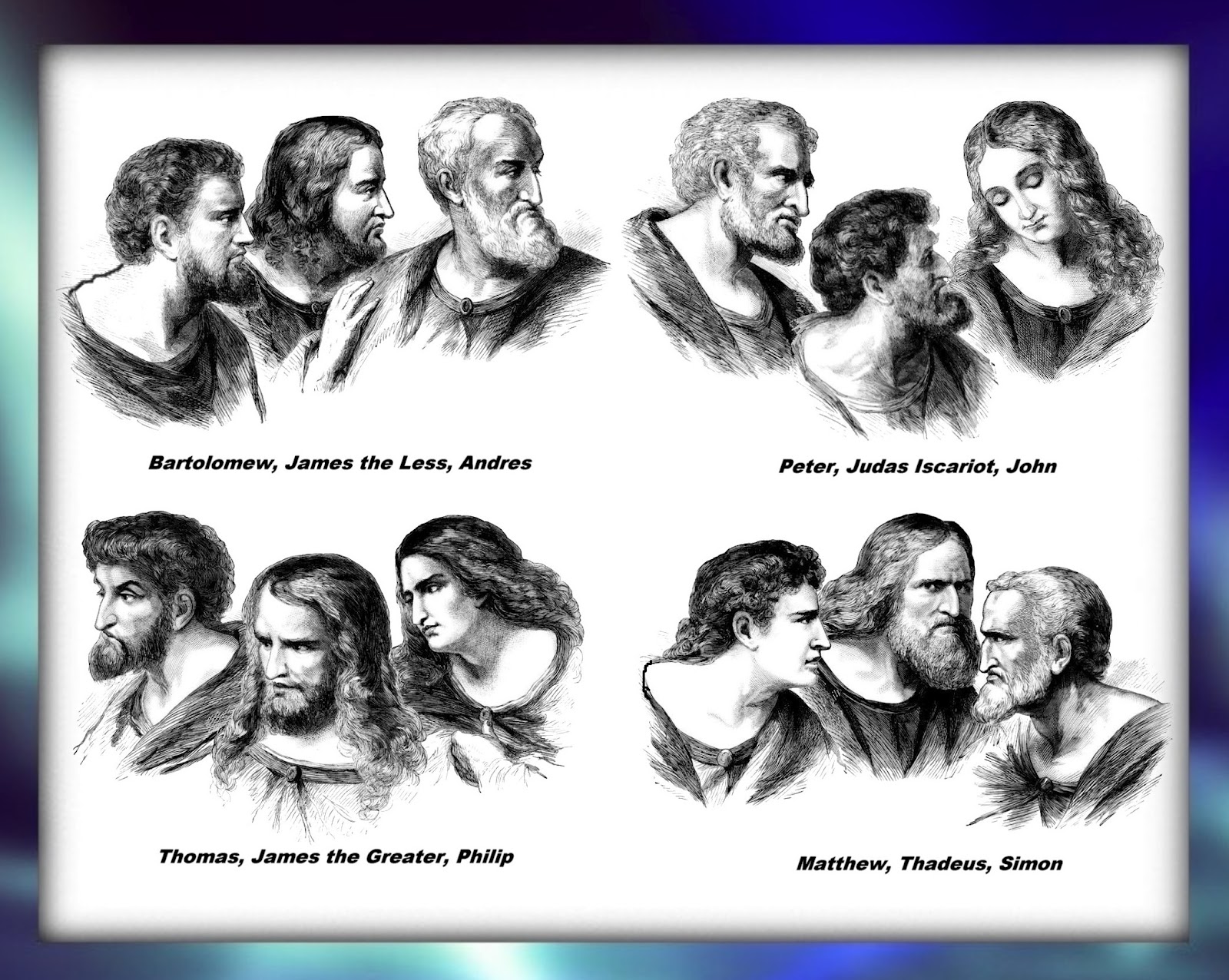
The indispensable standard the Bible gives for someone to be an Apostle is that it “must be one of the men who accompanied Jesus with us the entire time that the Lord Jesus was among us” (Acts 1:21 God’s Word©). “We apostles are those men who ate and drank with Jesus after he came back to life” (Acts 10:41 God’s Word©)

What, then, are we to do about Paul who claimed he was an Apostle? “I am an apostle sent to people who are not Jewish” (Acts 11:13 God’s Word©).

The Twelve were centred in Jerusalem, though they did minister beyond the Jewish people. Paul came from Tarsus in the Province of Cilicia (noted for a major university) in what is now Turkey. In other words, while Jesus began the Good News Realm in Israel, Paul began that ministry to the Roman world. He was both a scholar and Roman citizen, as well as a Jew, and is, therefore, the icon of the merging of all people into the “one Lord, one faith, one baptism, one God” community (Ephesians 4:5-6) under the authority of Jesus Christ. This unity is “built upon the foundation of the apostles and prophets, Jesus Christ personally being the chief cornerstone” (Ephesians 2:20).

We are told that Matthias replaced Judas Iscariot as the twelfth Apostle of God’s chosen people, but the Bible does not record any replacements of martyred Apostles, nor someone else taking on the mantle of Paul. The role played by them is not, therefore, perpetual, but foundational. “The disciples were devoted to the teachings of the apostles” (Acts 2:42 God’s Word©). These teachings are now contained in the New Testament, and there is no need, even a prohibition on, adding to them!

This leads to the realization that there are no Apostles in the Church of today.

Further, no Christian has authority over other believers at all (except where the community of faith must discern what to do with any member who persists in error and refuses correction). The Church must not be organized as a hierarchy, because “Jesus called the apostles and said, ‘You know that the rulers of nations have absolute power over people and their officials have absolute authority over people. But that’s not the way it’s going to be among you. Whoever wants to become great among you will be your servant’ ” (Matthew 20:25-27 God’s Word©). The entire Church is an organization of those who serve, NOT those who lead and others who follow! That is another reason why there are no Apostles, because they exercised some authority to get things started, being the New Testament in flesh before it was Scripture. The long-term life of the Church rests upon service (Matthew 25:31-46), with only Jesus as the Head (eg Ephesians 1:10, 22, 4:15).

Humans like things organized because it gives them a sense of control, but one Christian having authority over others is always wrong. The pattern we have is: “Don’t let anyone look down on you for being young. Instead, make your speech, behavior, love, faith, and purity an example for other believers” (1 Timothy 4:12, God’s Word©); and, “Don’t be rulers over the people entrusted to you, but be examples for the flock to follow” (1 Peter 5:3 God’s Word©).

Anyone, therefore, who claims to be a modern day Apostle cannot be taken seriously.

Priscilla and Aquila Still Teach

The married couple of Mr. and Mrs. Priscilla and Aquila are one of many examples of the early Church teaching and living the Gospel. Not only were they witnesses to the Good News about the Saviour, Jesus Christ, but together this duo trained Barnabas who then went out into his field of service and mission.

Aquila and Priscilla were considered equal. Of the 6 times they are mentioned, 3 times Aquila is named first and 3 times Priscilla is named first. Rooted in contemporary culture too many male leaders claim women (in general) cannot teach. But Paul writes that “there is neither male nor female” (Galatians 3:28), and Paul mentions many women leaders of the Church.

So what does 1 Timothy 2:12 mean, “I don’t allow a woman to teach or to have authority over a man. Instead, she should be quiet” (God’s Word Translation©)? Much can be said, but I refer only to the fact that verses 8-10 are plural, and since verses 11-12 use the singular (“woman” and “man”) it is not an issue of gender, but about wife and husband. A wife should not teach her husband, or usurp (interfere with, or interrupt, her teaching husband) during a gathering of believers. This is consistent with Jesus teaching that no believer should “have absolute power over people” (Mark 10:42 God’s Word Translation©). It also is consistent with Jesus teaching that if you have an issue with someone you first speak to them face-to-face privately, not in public (Matthew 18:15)! This shows how we must carefully consider the whole Bible, and not pick out one verse to give it a meaning which is contrary to the rest of Scripture because we can make it suit our own likes and wishes.

People also underestimate the incredible influence and pressure of society and culture and tradition on us, for human cultures treat people in categories (gender, race, economic status, age, etc.). God sees us as unique persons. The Bible declares, “There are neither Jews nor Greeks, slaves nor free people, males nor females. You are all the same in Christ Jesus” (Galatians 3:28 God’s Word Translation©). This prohibits racism. James strongly teaches against showing favouritism to the rich (James 2:1-5). Paul clearly cannot be teaching sexism, then.

We must not let culture or tradition shape our faith. Many are the warning signs against giving up spiritual discernment for the easier route of peer pressure or religious domination. Instead,
always to submit to Scripture even if it makes you uncomfortable or demands you must give up a pet belief or cultural practice. “Ezra was determined to study the Lord’s Teachings, live by them, and teach their rules and regulations in Israel” (Ezra 7:10 God’s Word Translation©).

Never acquiesce to, or relax in, any theology or institutional doctrine, but, “Do your best to present yourself to God as a tried-and-true worker who isn’t ashamed to teach the word of truth correctly” (2 Timothy 2:15 God’s Word Translation©).

***This post is a sister to “Submission” which was published October 7, 2018. I respectfully suggest they could be read together.

Why ME

When you ask, “Why is this happening to me?”, who is the centre of your universe?

When Jesus was dying on the cross at the hands of brutal people, was the question from the cross, “Why me?” or a plea to “Pay them Back?”?

No. Jesus did not die for self. Jesus died for others, even as they sinned and abused and mocked the Saviour Who died to save them.

If anyone loves God with heart, soul and might (Deuteronomy 6:5), and others at least as much as they love themselves (Leviticus 19:18), Jesus would be the centre of their universe, in good times and disasters.

Would such a person not come to realize that the question is not, “Why me?”, but “How can God save or strengthen those around me?”

Life from The Spirit is not for what I can get out of it, but how I can, in all things, shed the Light of Christ into a dark and broken world.

As a disciple of Jesus I already have the ultimate reward, salvation in this world and eternal peace and life in the next. What more do I need?

Why do I want a life that feeds my temporary ego/flesh instead of bringing hope and healing to people at the working of The Spirit?

Jesus came into the world to bring eternal life to all who believe, not temporary personal pleasures.

A soldier concerned only with personal pleasures and ego-stroking would be useless. So with us.

“The Lord isn’t slow to do what he promised, as some people think. Rather, he is patient for your sake. He doesn’t want to destroy anyone but wants all people to have an opportunity to turn to him and change the way they think and act” (2 Peter 3:9 God’s Word Translation©).

Does this verse also describe your life goal?

That’s a good question.

Faith in a Worldly Culture

People underestimate how they are manipulated and controlled by culture. I am not talking conspiracy theories here. I refer to the habits and customs that surround us and which we follow without thinking about even when they turn us into an anti-Christ. This cannot be overstated.

I will speak only of the Canadian culture here (though it is part of what is termed the “western culture”). We have the Canadian Charter of Rights and Freedoms. This particular cultural institution has become the foundational motivation for congregations that refuse to follow public health orders during the pandemic. Their claim is that they have freedom of religion in this document which means they are exempt from any law which they interpret to persecute their customary practice of religion. Notice that culture plays a double role in this fiasco.

The congregations are enveloped in a subculture that defines worship as meeting in a certain place at a certain time, and they define this further to be the primary definition of their identity. As prisoners of the wider culture of “rights” they use the secular laws to demand their religious laws as having priority over their responsibility for each other, inside and outside their circle.

This use of rights is entirely selfish. They refuse to see this because that would mean reviewing their subculture of privilege, that their right to act their way is superior to all other “rights”.

Jesus had the right to a fair trial, a right which was denied to the Christ. So did Jesus appeal the kangaroo court? Did Jesus whine on the cross about personal innocence and the injustice foisted upon the “Sinless One”?

No, because secular rights, won or argued in secular courts (or even religious courts) betrays an attitude of mastery or control instead of servanthood.

Here is the extreme example to verify the stand of the Bible (Matthew 5:40-41). Jesus taught that if someone sues you for your shirt, give them your coat also. If you are compelled by a military or civic power to carry a load for one mile, then carry it for two. “Love your enemies” (Matthew 5:44).

If a public health order suspends the “right” of congregations to meet en masse in their precious edifice, then the congregation should not only obey it, but over-obey it somehow.

Instead we have self-righteous religious fanatics demanding their “human” rights to reject the teaching of Jesus, deny their community responsibilities, publicly declare that they have superior rights to others in the culture and forfeit the role of serving in their arena of operation.

What is their justification to abandon what identifies people as followers of Jesus instead of self and culture? They are heroes (self-appointed, alas) who are fighting for the human rights of all religious and spiritual people! I don’t need that. “If God is for us, who can be against us” (Romans 8:31b).